Choosing an oral history app for families
An oral history app for families should do more than save audio. It should help preserve a life story across many conversations and keep the archive usable.
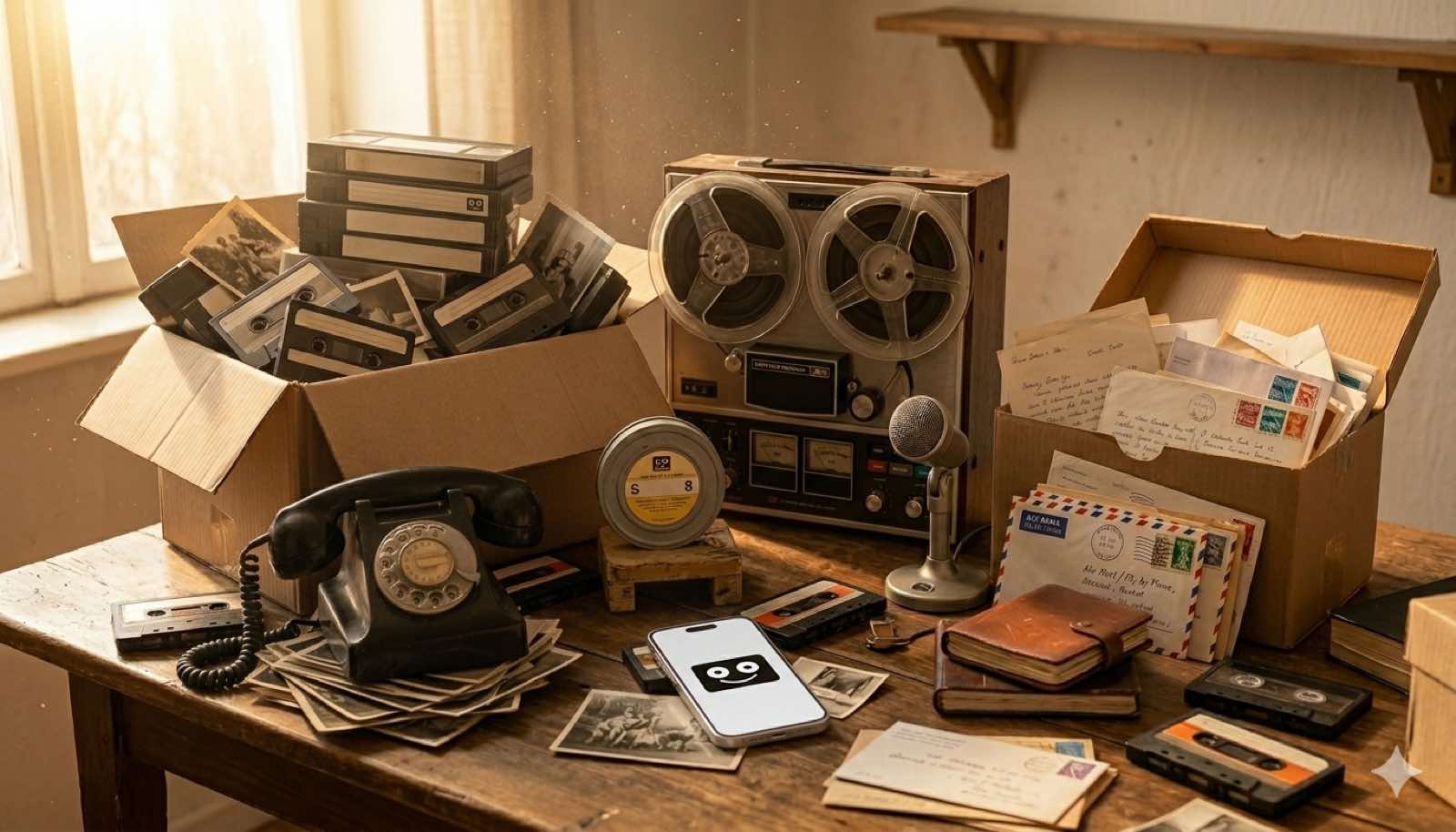
Families looking for an oral history app usually start with a simple question: how do we preserve someone's stories before they are gone? The obvious answer is to record them. The harder part is keeping those recordings usable after you have twenty of them.
What families actually need
A family oral history project is rarely just one interview. It is a series of conversations spread across months. The tool should support that reality.
- Voice-first conversations
- Continuity across multiple sessions
- A way to track people, places, and dates
- Clear separation between original voice and summaries
- Privacy controls for deeply personal material
Why voice memos are not enough
Voice memos are useful for capture, but not for retrieval. Once you have ten or twenty files, the archive becomes hard to navigate. Family history turns into a folder of unlabeled files.
What makes HappySouls different
HappySouls is an oral history tool for families who want the archive to stay navigable across many sessions. It guides long-term life story interviews, carries context forward, and keeps the audio exactly as spoken - not just a transcript. The archive builds into a timeline and written chapters the family can come back to.
When to choose this kind of tool
It fits when you want the archive to be something a grandchild can actually navigate ten years from now - not just a collection of saved audio files.
For a practical starting point, read how to preserve a life story, how to record family stories, and how to record family history. If you are comparing options, read about what an AI biographer does, memoir apps for parents, or how to preserve life stories.
Build a family archive before the stories fade.
HappySouls is designed for long-term life story interviews, not one-off recordings. Join early access and help shape it.