How to record family history
A practical guide to recording family history through relaxed conversations, better prompts, and a system that keeps stories organized over time.
If you want to record family history, the hardest part is usually not the recording itself. It is getting started without making the whole thing feel like an assignment. Many families worry about asking the wrong question, or end up with good recordings they never go back to.
A better approach is to think less like an interviewer. You are not trying to extract facts on command. You are trying to help someone remember a life in enough detail that a grandchild who never met them could actually feel it.
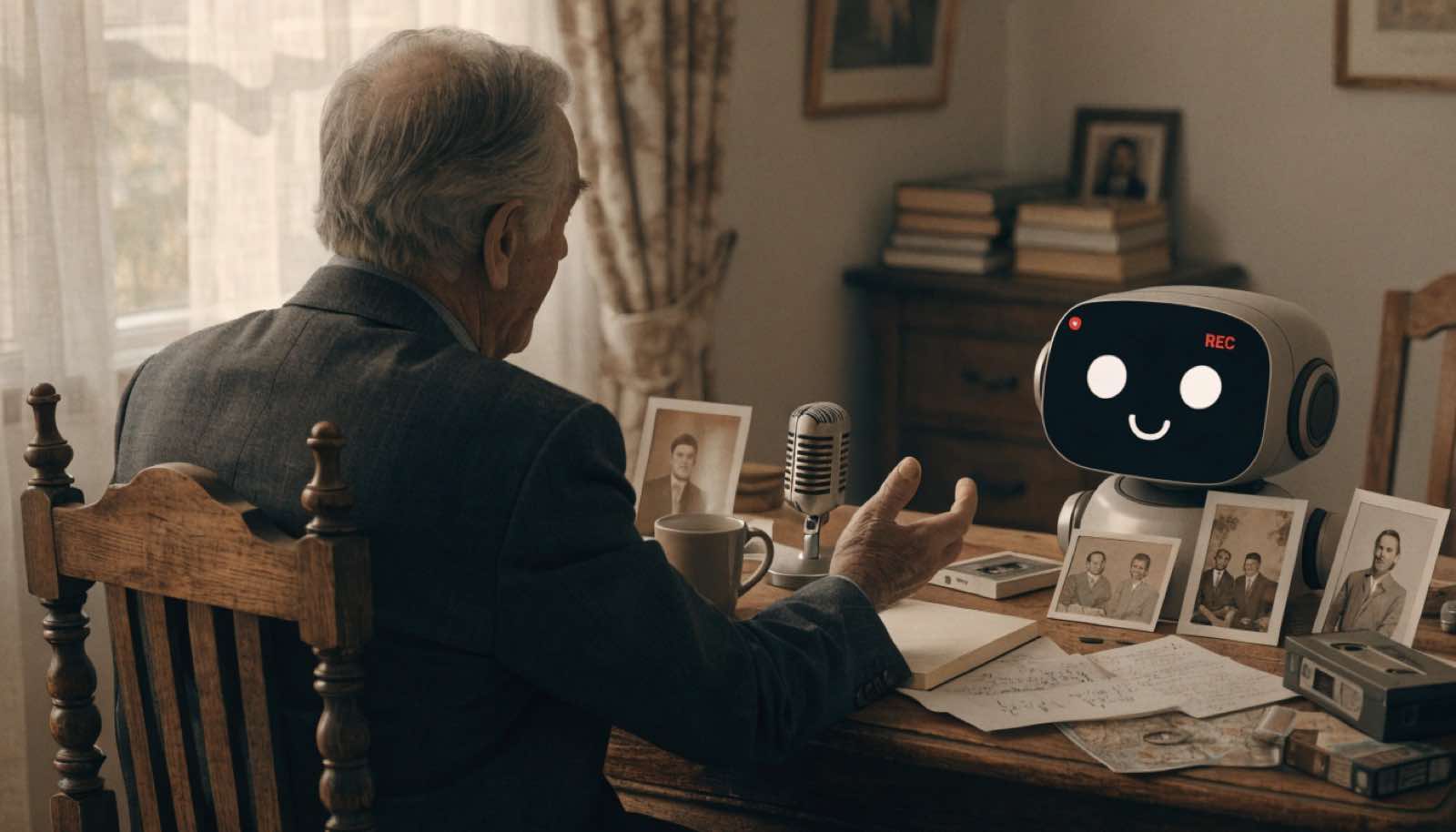
Start small and specific
Instead of asking for a full autobiography, ask about one room, one job, one friendship, one move, or one family ritual. Specific prompts make memory easier to access.
Let stories wander a little
Family history rarely comes out in clean chronological order. Someone may jump from childhood to marriage to a war story and back again. That is normal. What matters is capturing the thread and returning later to fill gaps.
Use prompts that bring out detail
- Who in your family was hardest to forget?
- What place from your childhood can you still picture clearly?
- What family habit do you think came from an earlier generation?
- What story got retold at gatherings, and why?
Keep the archive usable
Recording family history only helps if the stories remain findable. Over time, families need a way to organize recordings around people, places, dates, and themes so the archive becomes easier to explore instead of harder.
Saving audio is the easy part. What matters is whether the next generation can understand what they are hearing, and why it mattered.
Return for more than one session
The first conversation usually opens the door. The second and third often reveal the stories that matter most. Family history becomes richer when the process is ongoing.
Where HappySouls fits
HappySouls helps families run long-term life story interviews that stay connected across sessions. Each session picks up where the last left off, and the conversations build into a timeline and written chapters over time.
You may also want to read how to record family stories, how to preserve a life story, and best questions to ask grandparents.
Build a family archive before the stories fade.
HappySouls is designed for long-term life story interviews, not one-off recordings. Join early access and help shape it.