How to record family stories
Recording family stories is easy. Keeping them organized, searchable, and meaningful years later is the hard part. Here is how to do both.
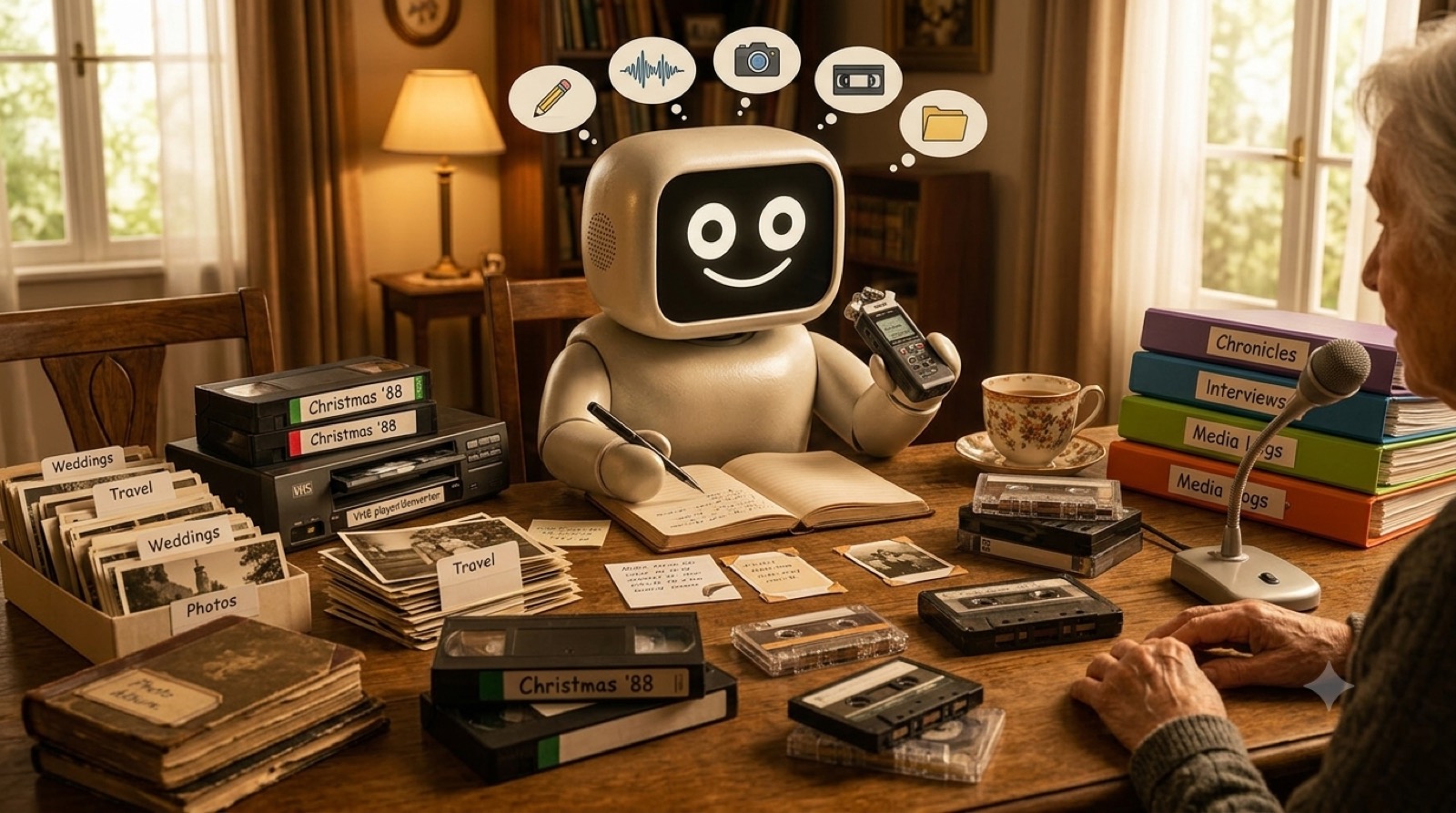
If you want to record family stories, start with the simplest step: capture the conversation. But if you stop there, you often end up with unlabeled files, missing context, and stories nobody can find later.
The real goal is preservation, not just capture. That means keeping enough structure around the recording that a child or grandchild can actually find what they are looking for years from now.
Start with voice, not pressure
Most people tell stories more naturally than they write them. A calm recorded conversation usually gets better material than asking someone to sit down and produce a polished memoir.
- Choose a quiet setting
- Ask one question at a time
- Follow emotion and detail, not just dates
- Keep sessions short enough that the person does not tire out
Ask for scenes, not summaries
“Tell me about your childhood” is too broad for most people. Better prompts focus on one scene, one person, or one decision.
- What did your home smell like when you were young?
- Who in your family had the strongest personality?
- What job changed the direction of your life?
- What was a choice you made that surprised even you?
Organize the story as you go
This is where most families get stuck. They may have hours of good audio, but no timeline, no topic tags, and no easy way to find the story about the immigration journey or the first apartment.
A useful system should track names, places, relationships, and life chapters as the archive grows. Otherwise each session starts from zero.
Raw recordings are easy to make and hard to use. Structure is what makes them retrievable.
Return more than once
The richest family stories usually come out across several conversations. People remember more after the first session. They also become more comfortable once they know someone is genuinely listening.
Use a tool built for life story interviews
HappySouls helps families run voice interviews across multiple sessions and keeps those sessions connected. Each session picks up where the last one left off. The archive stays organized around the person’s own words and eventually produces written chapters, a life timeline, and a printable book.
If you are preparing for an interview, read questions to ask parents about their life or best questions to ask grandparents. If you are choosing a tool, read about oral history apps for families, what an AI biographer does, or how to choose a memoir app for parents. For the broader picture, start at the guides page.
Build a family archive before the stories fade.
HappySouls is designed for long-term life story interviews, not one-off recordings. Join early access and help shape it.