How to preserve a life story before it fades
How to preserve a parent’s or grandparent’s life story before the details disappear, through conversation, voice, and a structured family archive.
You have probably lived through this moment already:
A parent or grandparent tells an incredible anecdote. You discover a memory you had never heard before, a family story, a detail from their childhood, and you think: “I should record all of this one day.”
Then the conversation ends, life carries on, and a few months later that story has already faded a little.
That is how most memories disappear. Not overnight, but conversation after conversation. The good news is that you do not need to wait for the perfect moment to start preserving them.
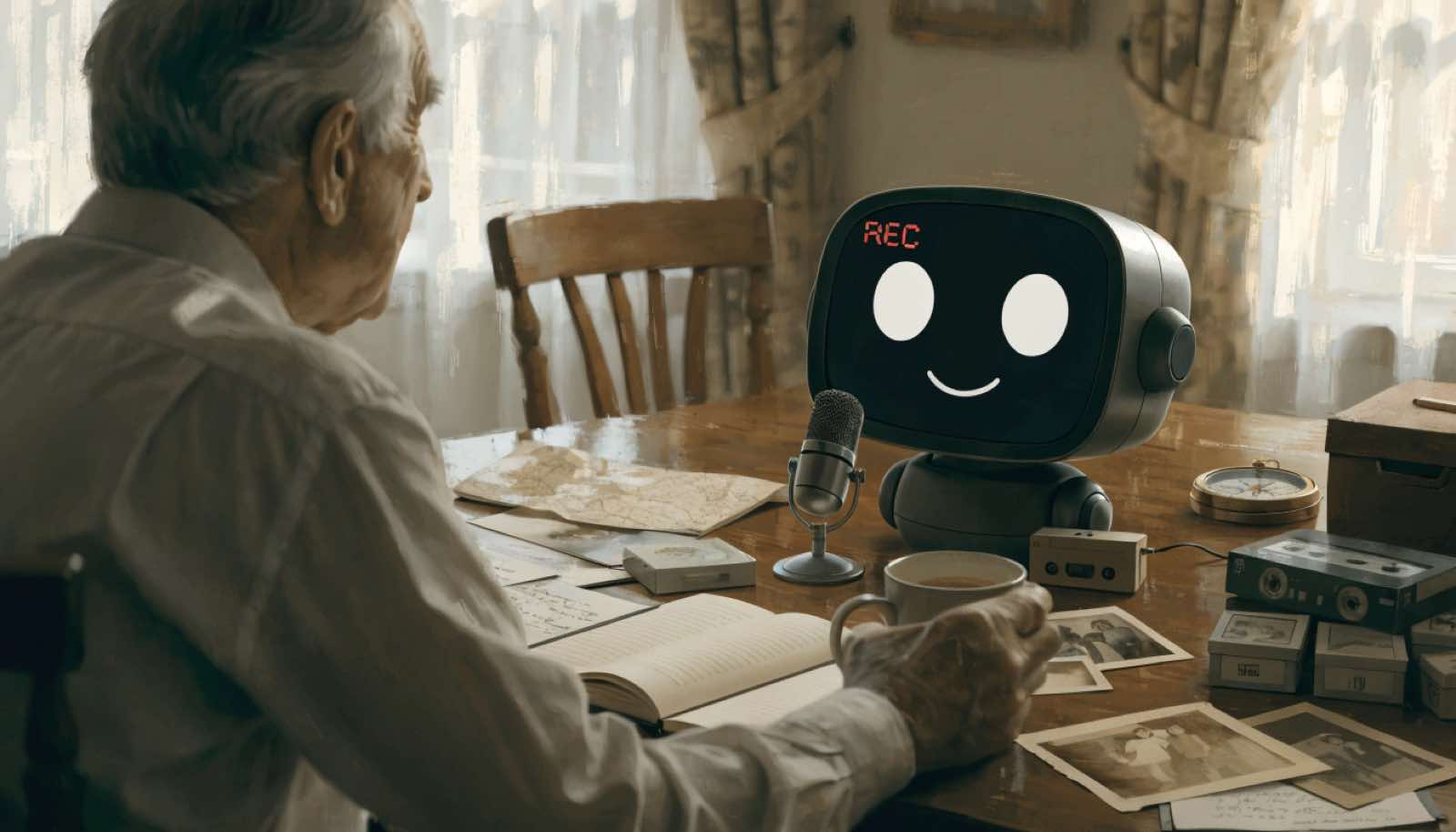
Memories change over time
Unlike photos, memories do not stay fixed. Over the years, some details disappear: a person’s name, the atmosphere of a place, an expression everyone used at the time. Yet those small details are what make a story feel alive.
The closer a memory is told to the moment it was lived, the richer and more precise it tends to be. That is why preserving a life story is not only about keeping a record. It is also about capturing details before they fade.
A conversation is often better than an autobiography
Asking someone to write their whole life story can feel discouraging. Asking them one simple question is much more natural.
“What was your neighborhood like when you were a child?” “What was the first job you dreamed of having?” “Who made you laugh the most in your family?”
Memories return by association. One anecdote brings back another, then a third. Little by little, a whole period of life takes shape again.
You do not need to tell everything at once
A life story is built over time. A few minutes are enough to bring back one memory, then another during the next conversation.
This approach is often more pleasant, and it helps recover details that would never have surfaced in one long interview. Step by step, different memories naturally begin to connect.
Preserve the voice too
A life story is not only a list of events. The way someone tells it matters just as much: a laugh, a hesitation, an accent, an emotion in the voice give a depth that no text can fully recreate.
That is what makes it possible, years later, to rediscover someone’s personality far beyond the facts alone.
Organize memories as you go
Collecting recordings without organizing them quickly becomes hard to use. You no longer know where to find an anecdote, whether a topic has already been covered, or which periods of life still need to be told.
A good archive connects memories to people, places, and the different stages of a life. It helps build a coherent story over time, rather than a simple collection of recordings.
How HappySouls helps
HappySouls was designed to make this process simple and natural. Through short voice conversations, the app asks the questions, remembers what has already been told, and helps you pick up the story where you left off.
Over time, your memories become a real family archive: recordings of your voice, organized chapters, a timeline of your life, and eventually a book you can print and pass on to the people close to you.
Preserving a life story is not only about telling the past. It is about giving future generations a way to discover a person through their own words, before time carries away the details that make each memory unique.
Next, you can explore questions to ask parents about their life, best questions to ask grandparents, or learn how to record family stories.
Build a family archive before the stories fade.
HappySouls is designed for long-term life story interviews, not one-off recordings. Join early access and help shape it.